The Fourteen-Year-Old Nobody Scouted
Every year, thousands of American teenagers get found. Not because they walked into the right room, but because someone built the infrastructure to go find them. A sophomore plays a few games of JV lacrosse, uploads a highlight video, and a college coach two states away sees it. Grades are good, the roster has a spot, and the offer comes: full ride, come as you are. That machinery runs quietly in the background of youth sports, and it works.
I know it works, because it changed one of my students' lives — and broke my heart doing it.
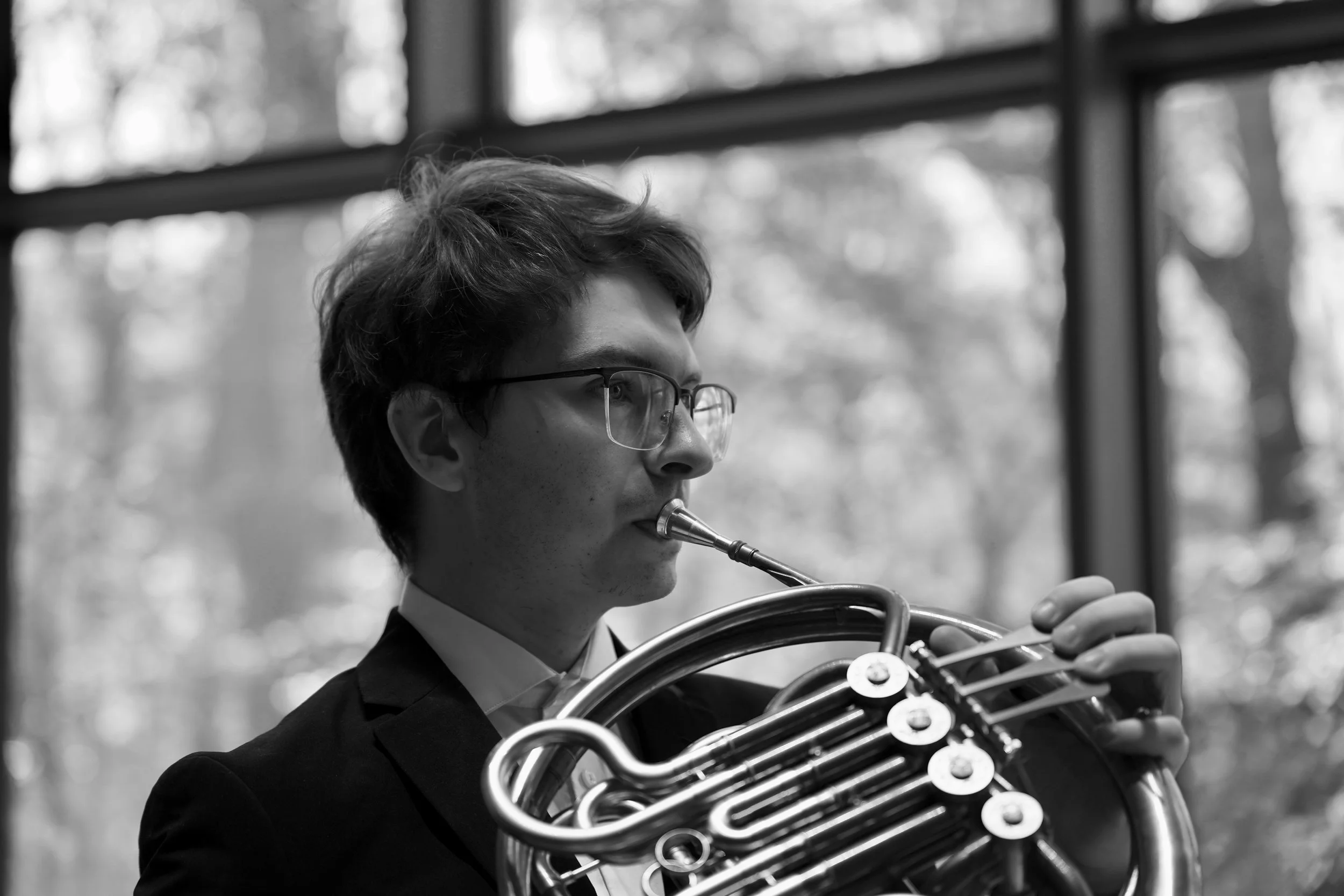
When I was a high school music teacher, I had an all-state French horn player. Four years, first chair, the real thing. At the start of his senior year he came to me and told me he wanted to study physics, that his parents had never gone to college, and asked if I could help him find a scholarship. I had four hundred students. I did what I could — sent a hundred emails, got a handful of confused replies. Two days later he came back to rehearsal and told me he'd found one. I was relieved, until he told me how. It was a lacrosse scholarship. He barely played lacrosse — one semester of JV as a sophomore — but a free highlight account on an app called Hudl had put a few seconds of video in front of a D3 coach in another state. Great grades, warm body, come fill out the roster. His mom jumped at it, and who could blame her.
He got on a plane with his lacrosse sticks and left the French horn at home. I called his mother and made her ship it to him. But the question stuck with me and never left: how is it this easy for an objectively mediocre lacrosse player to be found and funded, and so nearly impossible for a genuinely gifted musician?
That question is the reason CommonTime Pathways exists.
I was reminded of all of it a few weeks ago in Montreal, sitting across a podcast table from Dr. Cecil Adderly — president of the National Association for Music Education and chair of music education at Berklee College of Music — at the ISME World Conference. We were recording an episode of the CommonTime podcast, and the full conversation is worth watching. It was the first time the World Conference had come to North America in 26 years, and the theme was building bridges. Talking with Dr. Adderly, I kept hearing my own conviction come back to me from a different direction.
He made a point I haven't stopped thinking about: most of America is rural, and geography decides opportunity far more than we like to admit. Bob Morrison's research mapping music-education access county by county shows it plainly — access doesn't track neatly with population, and plenty of communities that would surprise you are underserved. NAfME's work through its state affiliates, its Music Teacher Profession initiative, and its Tri-M chapters is aimed squarely at reaching those communities. As Dr. Adderly put it, every community is important and every community is valued — and we can't neglect the ones that don't always speak up.
Here's where his framing and ours meet. He described what we do as a digital model for access, and then reached, unprompted, for the athletics analogy. A college coach looks for the best fit regardless of where a kid grew up. That's the whole point. The scouting infrastructure of sports doesn't wait for a family to afford a campus visit or learn to navigate a system nobody taught them. It goes and finds the talent.
Music has never had that. A thirteen-year-old in Bozeman, Montana, who is extraordinary on the trumpet is, for all practical purposes, invisible to the schools that would love to enroll and fund her. We find the athlete at seventeen — sometimes at three. My own son signed up for mini-kicker soccer at three years old, and the very first push notification I got from the team app, TeamSnap, was an ad: want to play sports in college? Sign up for a scholarship service today. Nobody was seriously scouting my toddler. But as a parent, I was being told, fourteen years early, that athletics could pay for college. There is no equivalent message for the arts. There should be.
That's the infrastructure we're building: an athletics-style scouting system for artistic talent, so a gifted kid is discovered at thirteen or fourteen instead of written off before anyone hears her play. When a middle schooler and her parents know a scholarship might be waiting, they stay with it. The investment makes sense. And artistic intelligence — the discipline, the pattern recognition, the creative problem-solving a young musician builds — turns out to be exactly the kind of preparation the next quarter-century of work will reward.
None of this is a critique of music educators, or of NAfME. It's the opposite. Teachers already have the hardest and most important job there is: finding the kid and telling her she belongs. What they've never had is the connective tissue — the infrastructure that carries that talent across county and state lines to the institutions ready to invest in it. Athletics built that machinery decades ago. It's long past time the arts had it too.
Because somewhere right now there's a fourteen-year-old at a piano that nobody is scouting. Our job is to change that before she leaves the instrument at home.
Watch my full conversation with Dr. Cecil Adderly, recorded at the ISME World Conference in Montreal, on the CommonTime podcast: https://youtu.be/VusS0BR-UI8?si=rw_eaiooZA3K0F_z