We've Been Doing Higher Education. Now We're Doing Highest Education.
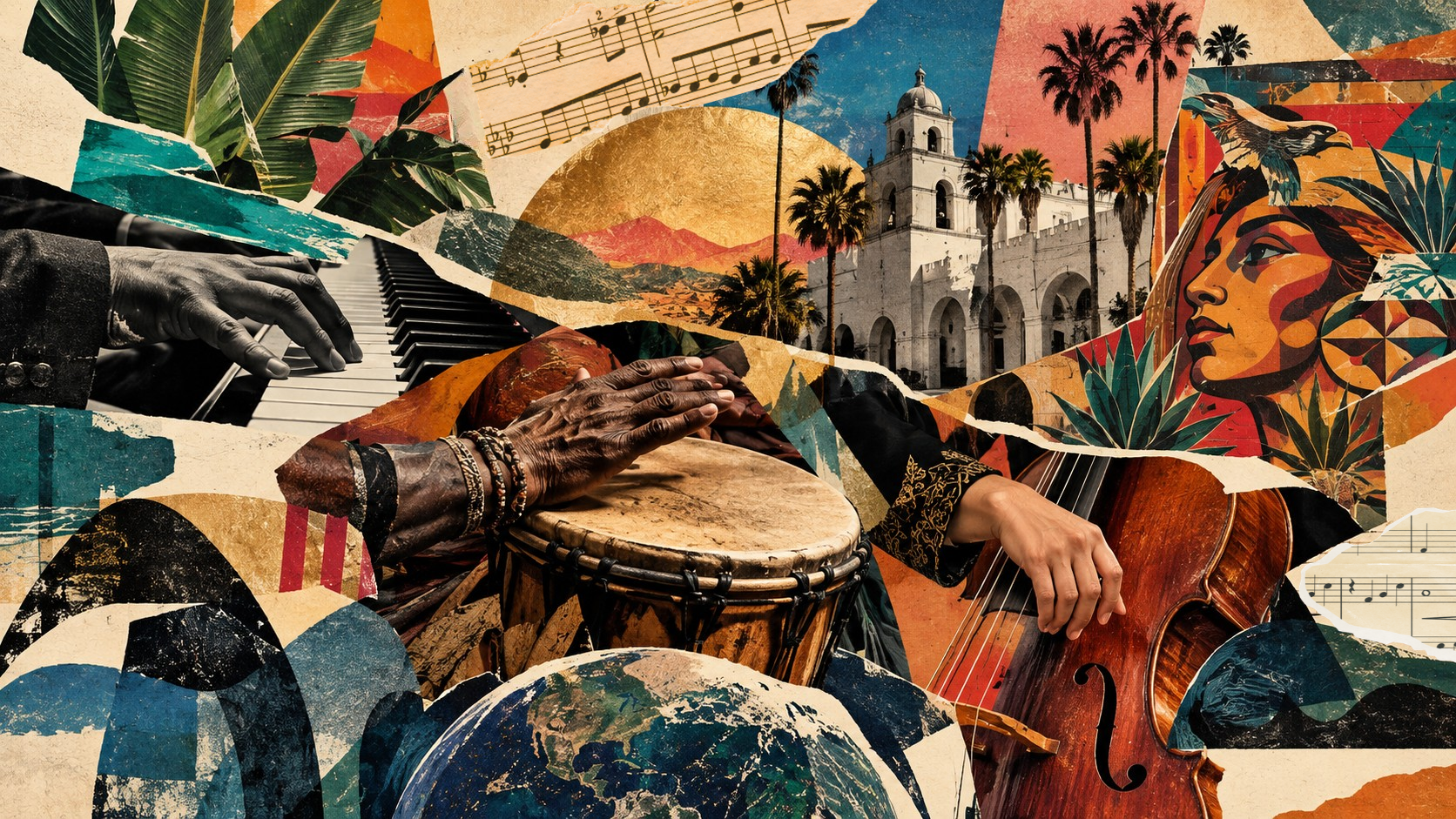
Some conversations you plan. Some conversations happen to you.
At the ISME World Conference in Montreal this summer (in beautiful, sunny, thunderstorm Montreal), I sat down to record a podcast with three people: Dr. Natasha Marin, a St. Petersburg Conservatory-trained pianist who was presenting her paper "Global Transcultural Paradigm in Music" the next morning; her husband Cheech Marin, a lifelong musician (first record at age five) and the founder of The Cheech in Riverside, California, the world's first museum dedicated to Chicano art; and my friend Bashiri Johnson, who has spent more than 40 years playing percussion for everyone from Michael Jackson to Ray Charles, and who founded Drum One Drum All.
I told them it would be a conversation led by all four of us. Within ten minutes I was the student. Midway through I said it out loud: this has to be one of the most ridiculously wonderful conversations I've ever had. I meant it.
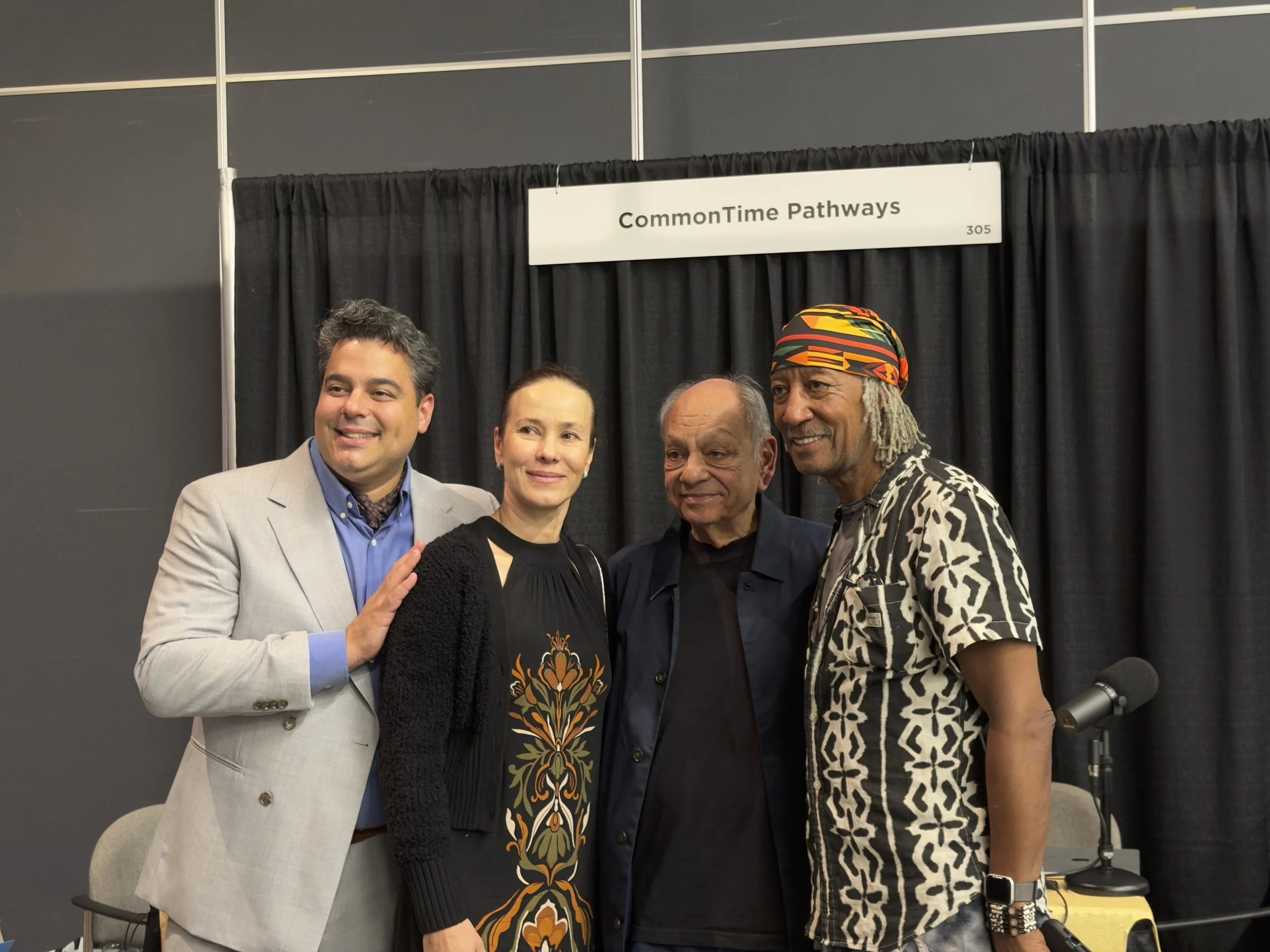
From left: Eytan Wurman, Dr. Natasha Marin, Cheech Marin, and Bashiri Johnson at the 37th ISME World Conference in Montréal, July 2026.
Monocultural, multicultural, transcultural
I taught middle school choir and general music for more than a decade. Like most American music teachers, I was encouraged to run a multicultural classroom: bring in the cultures of the students in front of you.
Natasha pushed me past that. Drawing on Huib Schippers' Facing the Music, she described a continuum societies move through: monocultural, then multicultural, then transcultural. Monocultural is one point of reference, often without knowing it. Multicultural is awareness that other cultures are present and influencing yours. Transcultural goes deeper: cultures stop sitting side by side and start shaping a shared identity, with every tradition given equal weight.
The part that stopped me: this isn't policy and it isn't politics. It's what happens to humans as migration and access to information bring us together. The only choice is how we go through it. In Natasha's words: "Do we want to fight or do we want to unite?" She calls music a "panhuman phenomenon," one of the disciplines best suited to help us choose the second option. Bashiri made us stop and sit with that phrase. You'll hear why.
Transculture starts with roots
Transculture is the opposite of assimilation. Assimilation erases cultures in favor of one, while transculture is built from people who bring their own cultures and give each one equal weight.
Natasha was clear that preservation comes first. The Beethoven sonata specialist matters. Monocultural traditions matter. You can't get to transcultural if nothing is preserved at the root.
That is exactly what Cheech built. Chicano art isn't Mexican art and it isn't California art. It's its own thing, and until The Cheech opened, now entering its fifth year, it had no institution of its own. Natasha connected it to LACMA, where director Michael Govan remixed a global collection thematically rather than by geography or chronology. One is the root. The other is the shared canopy. We need both.
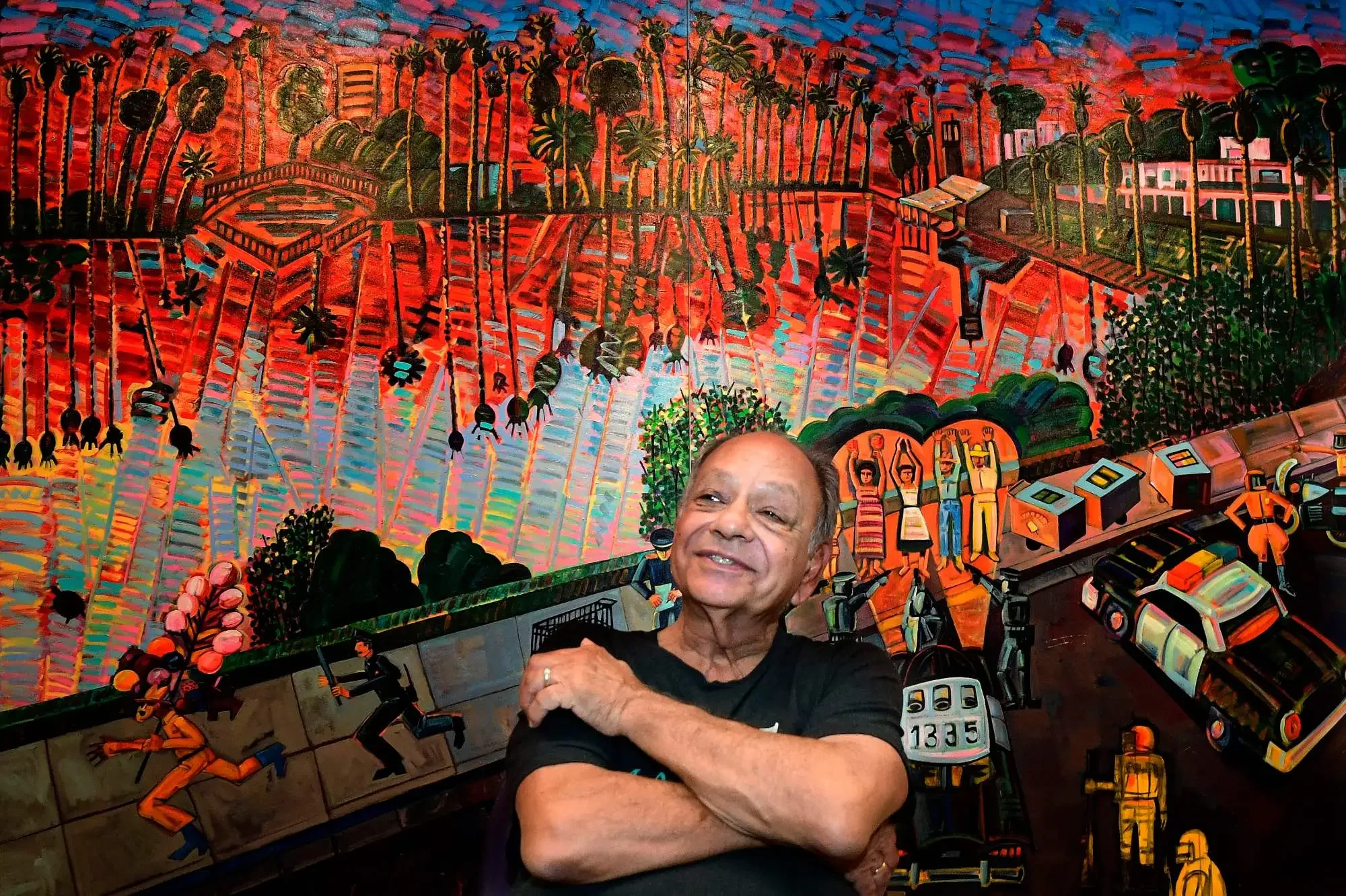
Cheech Marin at The Cheech Marin Center for Chicano Art & Culture in Riverside, California, home to his landmark collection of Chicano art. (Photo by Will Lester, Inland Valley Dailey Bulletin/SCNG)
Inclusive by design
Earlier that week I'd asked Bashiri what one musical culture does better than any other. His answer: African drumming welcomes everyone to be a beginner. I can't walk into a conservatory in Salzburg and be invited to play. I can walk into a drum circle.
That's Drum One Drum All. Bashiri teaches drumming to kids, seniors, blind students, people with disabilities, and working professionals. If you can walk, wave, or talk, you have rhythm in you. He gives you the bass tone, the open tone, the slap, the tap. You bring yourself, including your own culture.
Here's the tension for those of us in higher ed. We tell young musicians to be unique, and when they arrive at conservatory we too often ask them to sound exactly like the best player we know, just a little better. Natasha put it clearly: institutions have to preserve standards, but there have to be spaces for everything else too. The transcultural approach makes room for both.
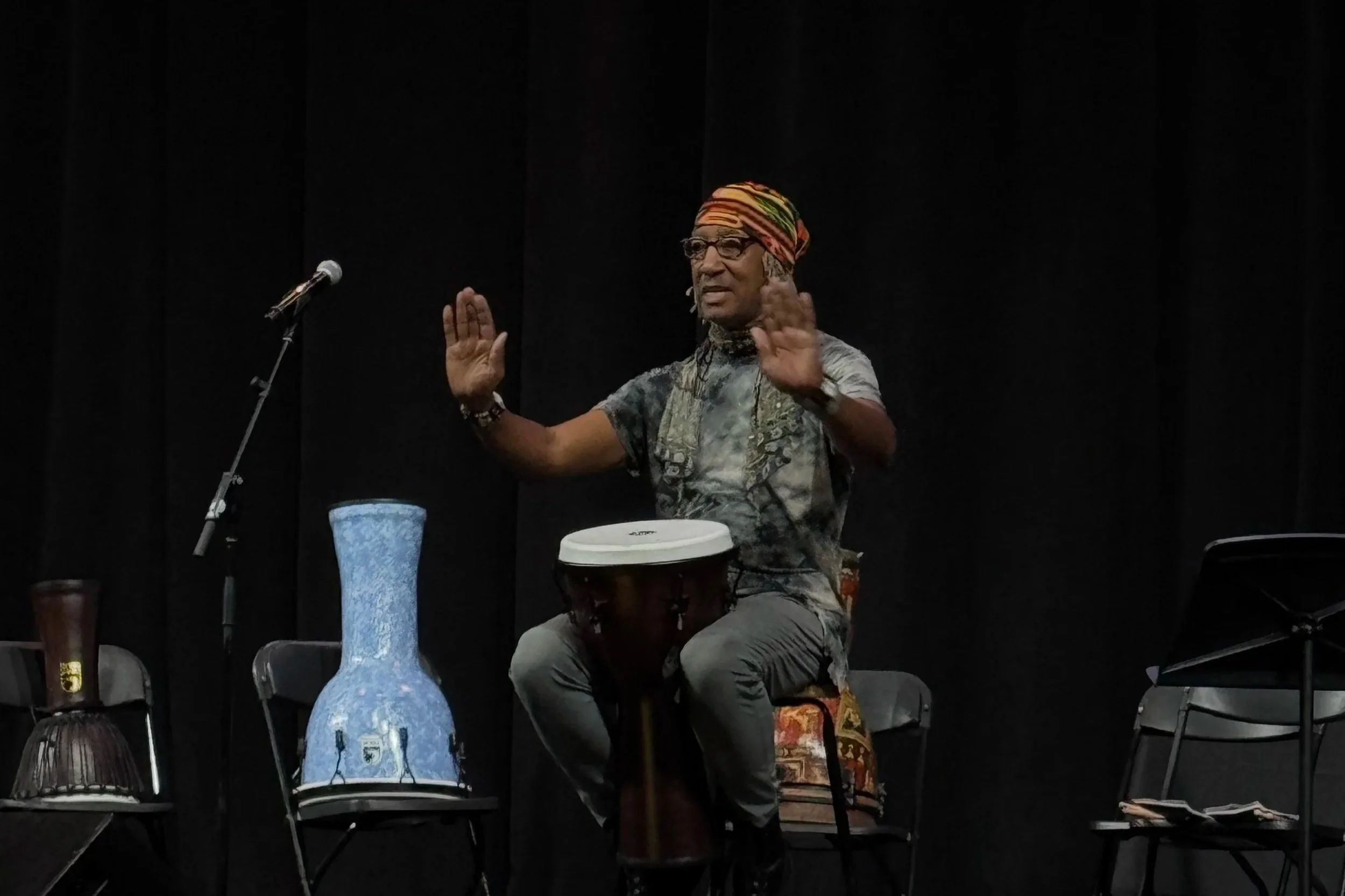
Bashiri Johnson demonstrates the power of rhythm during a “Drum One, Drum All” session at the 37th ISME World Conference in Montréal, July 2026. Photo courtesy of CommonTime Pathways.
Highest education
Then Cheech told us how he learned about art. He was eight, the youngest of four Chicano cousins in South Central LA, all at Catholic school, all fast-tracking toward the clergy. The cousins assigned each other topics to learn outside the curriculum. He drew art. No Google, no TV. So he went to the library, where a librarian took him under her wing every Saturday: Impressionists one week, Dutch painters the next. He watched themes recur and get reinterpreted across cultures.
Years later, at the Rijksmuseum, he wandered out of The Night Watch in a daze and found a dozen tiny Vermeers in the next room. His takeaway: "It's not the size of the art. It's what's inside the frame that counts."
When I said college at its best is a giant mixing bowl, where students leave home, meet people unlike themselves, and learn things that aren't on any syllabus, Bashiri topped me:
"We've been doing higher education. Now we're doing highest education."
Music, art, community, learning from each other. That's the highest.
Why this matters to us at CommonTime
We spend our days helping creative students find their way into higher education. This conversation reminded me why that work matters beyond enrollment. Young musicians arriving on campus bring their cultures with them, and they're often the ones who move a campus from multicultural toward transcultural. Institutions that take those students seriously are recruiting the people who make highest education possible.
Listen to the full conversation
There's so much more in the episode: Cheech and Natasha's first date (King Sunny Adé in the car, calamari steak at dinner), the year Cheech served as a "Baroque roadie," Miles Davis recognizing him at a Malibu sushi bar, and our rapid-fire round on the one artist we'd each want to see again. Bashiri picked Satchmo. Cheech picked Vermeer, and then Miles. Natasha picked Anton Rubinstein, founder of the St. Petersburg Conservatory, so she could hear him improvise. (I'm still holding out for Ella.)
Listen to the full episode here: https://youtu.be/ceTUNGaDPXo?si=lmMS5qBefvjQp2QP
Thank you to Natasha, Cheech, and Bash for the time and the generosity, and to ISME for building the room where conversations like this happen.
What would your classroom, or your campus, look like if it were built for highest education?